Iwokrama’s environment is one of the most intensively biodiverse regions on the planet
The Iwokrama Forest and the neighbouring North Rupununi wetlands are an extraordinary ecosystem encompassing a range of habitats which include more than 200 lakes, braided rivers flowing over volcanic dykes, 1,000 meter mountains, lowland tropical rain forests, palm forests, seasonally flooded forests and savannahs.
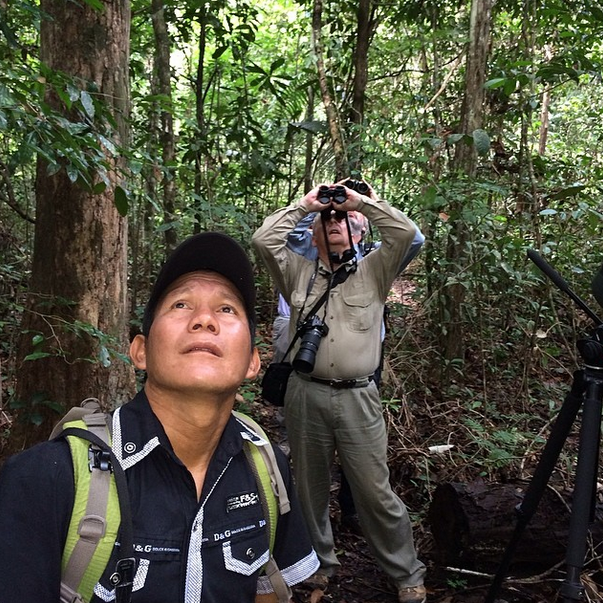 Floral and Faunal Biodiversity at Iwokrama
The Iwokrama area boasts an extraordinary biodiversity which is world class, it is home to healthy populations of some of the world’s largest and most endangered species – the “Giants of El Dorado” including the Harpy Eagle, the Jaguar, the Giant Anteater, the Giant River Otter, the Arapaima (the world’s largest scaled fish), the Anaconda, the Black Caiman, the Giant River Turtle and the Bushmaster snake.
The Iwokrama Forest and North Rupununi Wetlands also contain the largest number of fish and bat species in the world for an area of its size.
Faunal diversity
30% of faunal species in this area are classified as rare and endangered.
- 130 species of mammals
- 500 species of birds
- 150 species of reptiles and amphibians
- 420 species of fish
- 86 species of bats
Floral diversity
There are 9 distinct forest types in the Iwokrama Forest.
- The largest forest type covers 33% of the forest – mixed greenheart, black kakaralli and wamara forest.
- Around 20% of the forest is mixed greenheart, sand baromalli and soft wallaba forest
- About 16% of the forest is mora, manicole, crabwood and trysil forest
- 15% of the forest is mixed low stature forest
- 7% of the forest is manicole, kokerite and soft wallaba palm forest
- the remainder of the forest is less than 5% each of wallaba, dakama, muri scrub and liana forest.
Botanical surveys of the Iwokrama Forest have found over 1,250 species of plants. However, the total number expected for the area is likely to exceed 2,000 species with additional work in highland areas.
Mammals of Iwokrama
Anteaters
Anteaters have long snouts and no teeth. They use their powerful front legs and long claws to tear open ant and termite nests, and then a long sticky tongue to gather up the insects. Anteaters do not walk on the soles of their feet when on the ground, but instead twist their foot and walk on the side or the knuckles. This leaves distinctive, odd-looking tracks
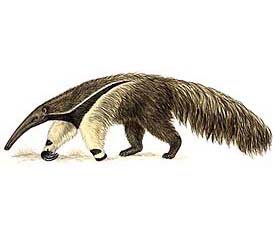
Giant anteater
Myrmecophaga tridactyla
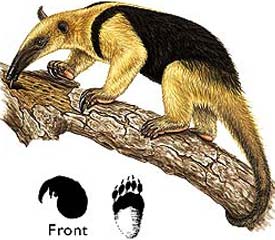
Tamanuda
Tamandua tetradactyla
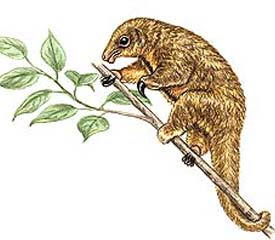
Pygmy anteater
Cyclopes didactylus
Armadillos
Armadillos have a distinctive bony shell which protects them. They have strong feet with long claws which they use for digging burrows where they rest and nest. They feed on ants and termites and may eat other plant and animal foods
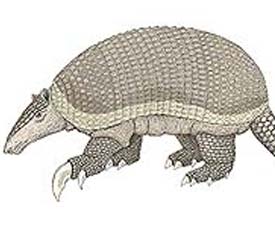
Giant armadillo
Priodontes maximus
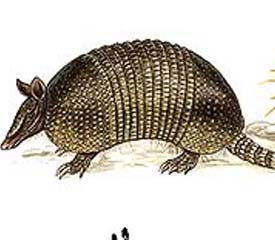
Great long nosed armadillo
Dasypus kappleri
Bats
Bats are the only mammals that fly. Their wings consist of skin membranes which are braced internally by very elongated hands and fingers. Nocturnal, most bats use sight and echolocation to navigate and find prey. Typically, bats are social and roost in groups. Different species feed on a great variety of foods: in Iwokrama, some species eat fruits, others pollen and nectar, insects, or small vertebrates (including the fishing bat), and there are even two species of vampires that feed on blood.
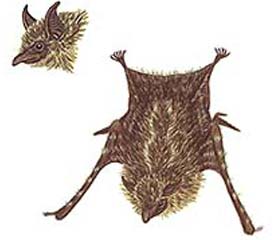
River bat
Rhynchonycteris naso
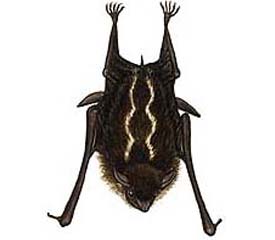
Greater white-lined
sac-winged bat
Saccopteryx bilineata
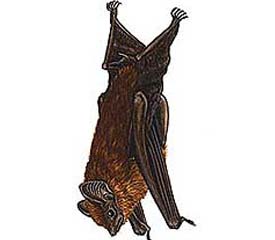
Chestnut sac-winged bat
Cormura brevirostris
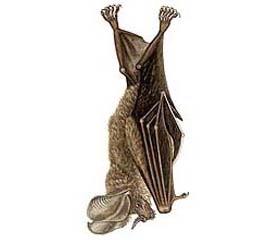
Frog eating bat
Trachops cirrhosus
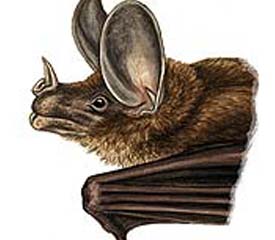
False vampire bat
Vampyrum spectrum
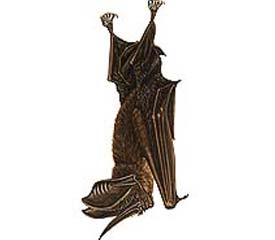
Sword-nosed bat
Lonchorhina aurita
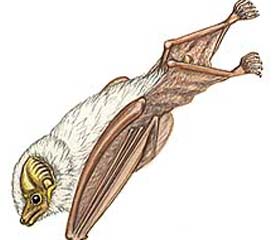
Northern ghost bat
Diclidurus albus
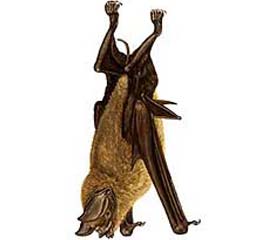
Greater moustached bat
Pteronotus parnellii
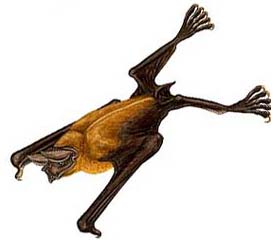
Fishing bat
Noctilio leporinus
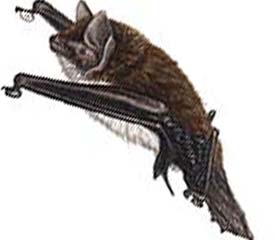
Spix's disk winged bat
Thyroptera tricolor
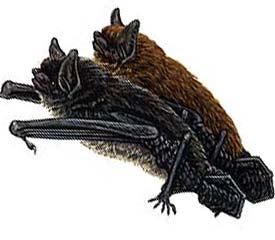
Black myotis
Myotis nigricans
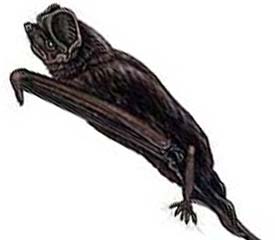
Black bonneted bat
Eumops auripendulus
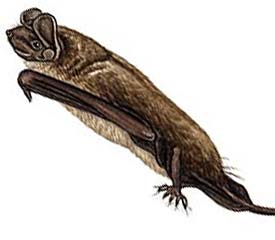
Common mastiff bat
Molossus rufus
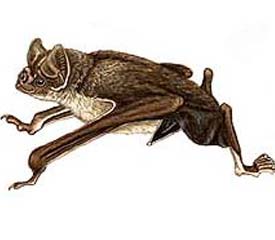
Common vampire bat
Desmodus rotundus
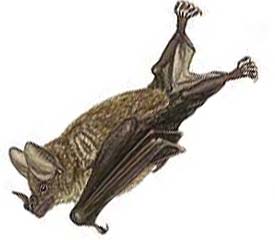
Common short tail fruit bat
Carollia perspicillata
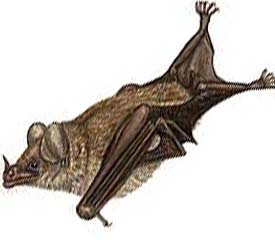
Common long tongued bat
Glossophaga soricina
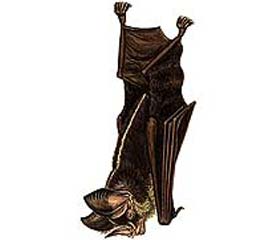
Striped hairy nosed bat
Mimon crenulatum
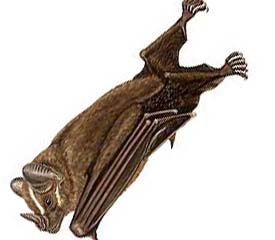
Greater fruit eating bat
Artibeus lituratus
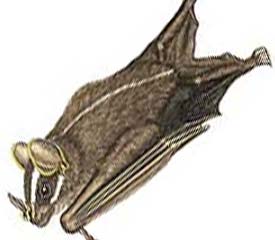
Commonn tent making bat
Uroderma bilobatum
Carinvores
This group includes mammals with large canines and most have slicing cheek teeth (carnassials) which they use to hold and cut their food. Many carnivores are omnivorous rather than strictly meat eaters, and some eat mostly fruit. Members of the group include dogs, cats, kinkajous and otters.
(coming soon)
Ungulates
This category includes two groups of large herbivores, the odd toed ungulates (perrisodactyls), such as the Tapir, and the even-toed ungulates (artiodactyls), such as peccaries and deer. Hoofed mammals walk on their toes which are tipped with one, two, or three hooves.
(coming soon)
Opossums
Opossums are marsupials which give birth to very small young that crawl to a teat (often located within a pouch) where they complete development. Most are good climbers, with a long grasping tail, and an opposable hind toe which acts like a thumb. They have more teeth than other mammals and are omnivorous, eating a variety of fruits, insects and small vertebrates. Most are nocturnal
(coming soon)
Primates
Agile climbers, monkeys and tamarins have forward facing eyes and dexterous, grasping hands and feet. The tail is long and is prehensile (grasping) in the larger species. New World primates are social animals, with well-developed communication systems.
(coming soon)
Rodents
Rodents are chisel-toothed mammals which are important fruit and seed consumers and dispersal agents. Rodents come in a wide range of sizes. In this section we include the large rodents which weigh more than about 2 kilograms.
(coming soon)
Rodents – Small
Rodents are chisel-toothed mammals which have large front incisors and no canine teeth. They are consumers of fruits and seeds for which they act as important agents of dispersal. In this section we include the small rodents (e.g., rats. mice, and spiny rats).
(coming soon)
Sloths
Sloths live in trees, where they often hang upside down from their hooked claws, only rarely descending to the ground. They specialize on eating leaves and have a multi-chambered stomach, reminiscent of a ruminant, to aid digestion.
(coming soon)